Tell us about you.
A short intake covers your history, symptoms, cycle and goals. Your panel is built from that information.
Your starting point
- How you feel
- Your health history
- Your cycle & goals

Two at-home blood tests. Understand what your results mean and what to do about it.
A short intake covers your history, symptoms, cycle and goals. Your panel is built from that information.
Two at-home blood tests, sent at the right time for your cycle. The app gives you your target dates, preparation instructions and the markers on each panel.
Why timing matters ↗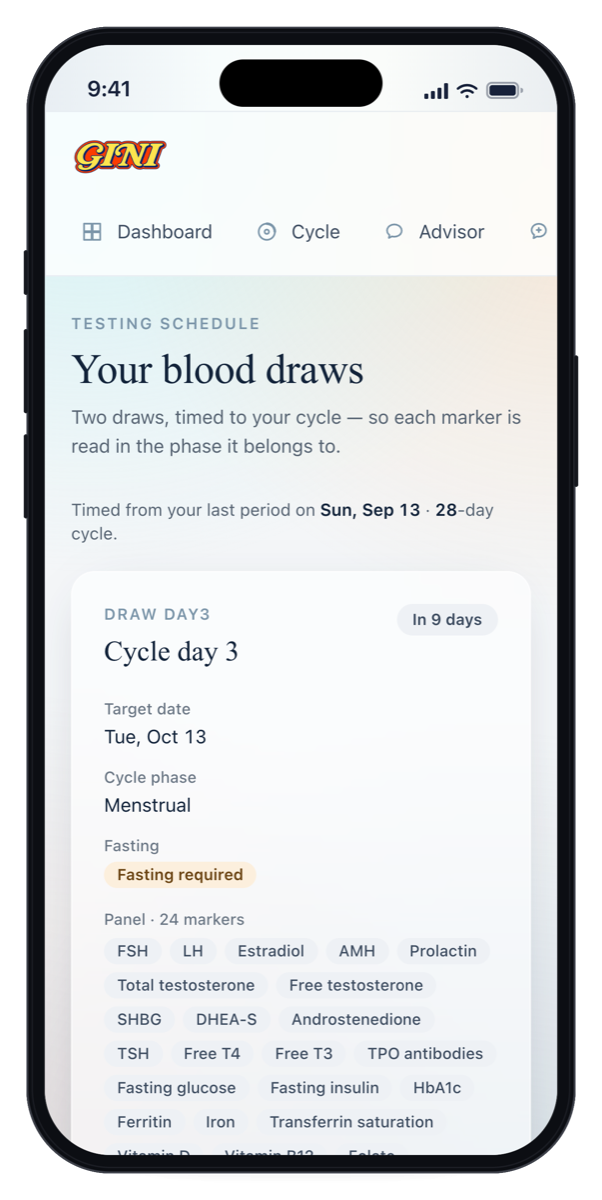
Use the upper-arm collection device at home, then seal your sample and send it to the lab following your kit instructions.
The device uses a small lancet at the skin’s surface, rather than a needle inserted into a vein.

Your results are reviewed by a doctor and read alongside cycle timing and your history. Plain-language explanations help you understand the numbers.
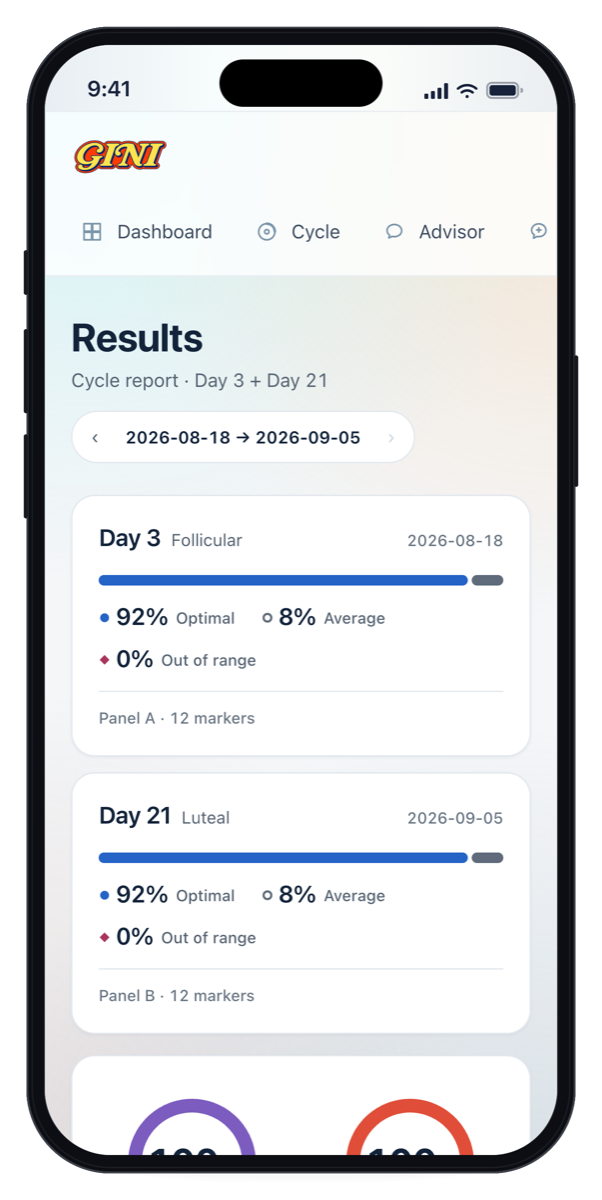
Understand what your results mean, what to pay attention to and what to follow up with your physician. Clear, doctor-reviewed insights help you decide your next step.
See your results on your phone or desktop. Follow markers across draws, explore changes over time and ask follow-up questions in the Gini app.
The in-app advisor gives educational wellness guidance grounded in your data. It does not diagnose or replace your doctor.
Gini’s published protocol uses two collections, typically around day 3 and day 21. Your dates and preparation instructions are tailored to your cycle and confirmed before testing.
Tell us during intake. The team will confirm which panel and collection timing are appropriate for your circumstances, including hormonal contraception and your stage of life.
In the Gini app, on your phone or desktop, with explanations and a summary to share with your doctor.
No. Gini helps you understand patterns and prepare for care. Diagnosis and treatment decisions belong with your clinician.
Join 5,000+ women ready for answers.
Gini grows woman to woman.
Share Gini with the women you want beside you.